


A professional nutrition label is not only important for product compliance, but also affects whether your product can enter the market successfully. To make a nutrition label, you need proper design, layout, and materials. This article covers the complete production process and helps you customize compliant nutrition labels.
Why Nutrition Labels Are Important

In almost all countries, food packaging for sale must have nutrition labels that meet the requirements. These nutrition labels must contain essential nutritional information and be produced in a standardized format, size, and unit. If the nutrition labels do not meet the standards of your target market, your product will not be able to be sold.
In addition to meeting regulatory requirements, professional nutrition labels can strengthen your brand image. This will make your product look more premium and help you improve brand recognition over time.
What Information Must Be Included on a Nutrition Label

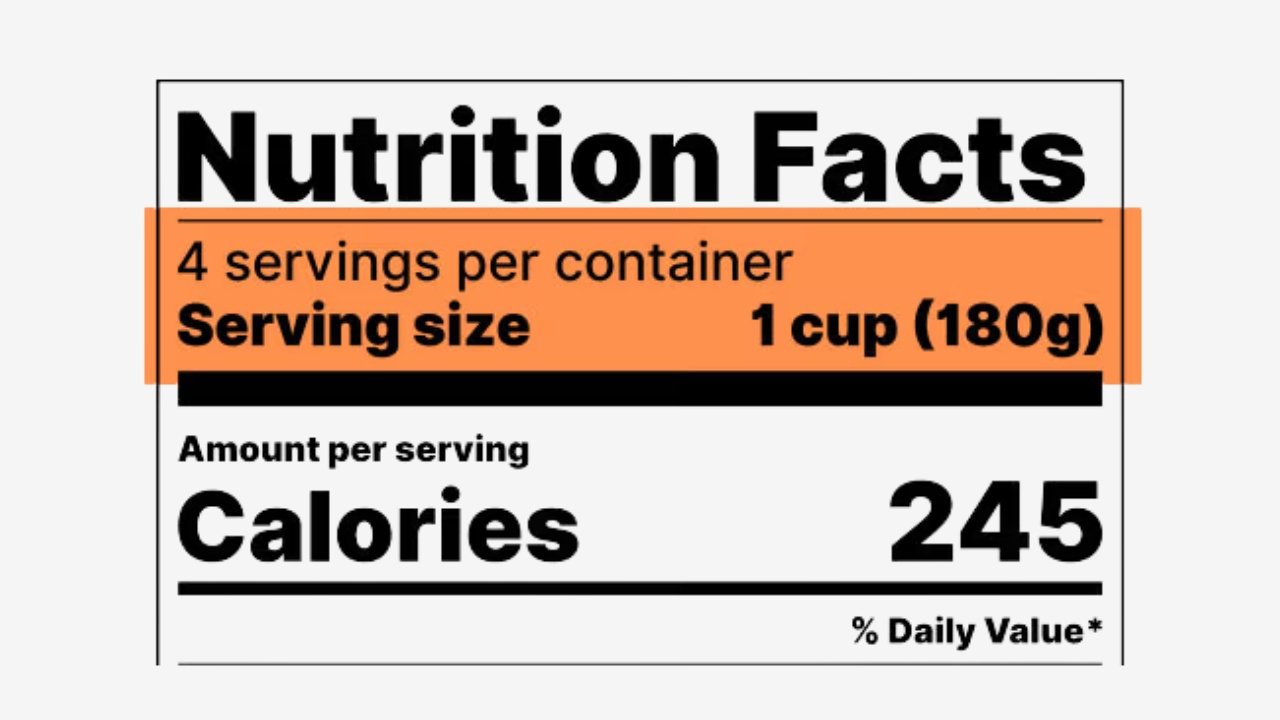
- Serving Size: On the nutrition label, the standard serving size of each food item must be indicated, such as cup, tablespoon, piece, slice, or jar. This tells the consumer that the nutritional value of your product is based on this serving size.
- Calories: Calories are one of the most important values for consumers. You can choose to display total calories or calories per serving.
- Macronutrients: A nutrition label must include key nutrients such as protein, fat, carbohydrates, sodium, sugar, saturated fat, and trans fat.
- % Daily Value: For most food products, the nutrition label must include the proportion of the daily recommended intake for each serving, to show the nutritional value of your product.
- Servings Per Container: This indicates how many servings are included in each product.
How to Make Professional Nutrition Labels

Confirm Nutrition Label Regulations
Different countries have different requirements for nutrition labels. Therefore, before you customize nutrition labels, you need to confirm the nutrition label regulations based on your applications.
- United States: The core regulation on nutrition labels in the United States is 21 CFR Part 101 Nutrition Labeling. After 2020, the FDA Nutrition Facts Labeling Guide has been mainly implemented.
- European Union: The core regulation for nutrition labels in the European Union is (EU) No 1169/2011. For nutrition claims such as “high calcium” or “low fat”, (EC) No 1924/2006 is used.
- China: The main standard for nutrition labels is GB 28050-2011.
- Canada: The requirements for nutrition labels in Canada mainly refer to the Food and Drug Regulations.
- Australia and New Zealand: Both countries follow the FSANZ Standard 1.2.8.
Design and Layout
Follow the Required Nutrition Label Format
A professional nutrition label isn’t just about including all the relevant information. The order of that information also follows a set standard. For instance, the nutrition label in the United States must use the official Nutrition Facts table, and you should arrange nutritional elements in accordance with the FDA format.
First, you need to indicate the content per serving, and then list calories, fat, saturated fat, trans fat, and other nutrients in the correct order.
Choose the Suitable Font Size
The information on the nutrition label must be clear and legible. Thus, you can choose a uniform font size and make the title and items, such as portion size and calories, bold. At the same time, there should be a certain distance between each character to ensure readability. Moreover, when designing patterns for the labels, you must ensure that the designs do not obscure the important information on the labels.
Layout Alignment
Different countries have different requirements for layout alignment on nutrition labels. In the United States, nutrient names must be left-aligned while the corresponding values are right-aligned. In Canada, nutrition labels typically use a two-column alignment format.
Suitable Materials
Shelf-Stable Food Nutrition Labels
For food products that are stored at room temperature, such as candies and cookies, we recommend using regular coated paper labels. These labels are cost-effective and are suitable for large-scale orders. In room-temperature environments, they are the most suitable option.
Frozen Food Nutrition Labels
If you want to customize the nutrition labels for frozen food, it is best to choose PP synthetic stickers and use low-temperature-resistant adhesive. The nutrition labels made with these materials are resistant to low temperatures and are less likely to curl or peel off in cold environments.
High-Fat Food Nutrition Labels
When you are customizing nutrition labels for high-fat foods such as meat products or bread, it is important to choose waterproof and oil-resistant labels. PET labels and PP synthetic paper labels are both good choices. These materials are more durable than standard paper labels and offer better resistance to oil.
If you want the nutrition labels to be more durable, you can choose to laminate the labels. The laminated nutrition labels can prevent the stickers from softening when exposed to oil, and they are resistant to scratches.
Choose the Suitable Printing Method
Digital Printing
If you want to customize a small number of food labels, you can choose digital printing. This printing method does not require plate making. You just need to determine the file design format, and then you can print it.
If your products need to be exported to different countries, this printing method can also quickly adjust the file format to meet different format requirements. Therefore, it is very suitable for customizing multiple versions of nutrition labels.
Flexographic Printing
Flexographic printing has good ink adhesion, so the ink stays firmly on the nutrition label. The PET nutrition labels printed in this way are wear-resistant and don’t easily fade. At the same time, this printing method is fast and supports roll-to-roll production. Therefore, if you want to order a large quantity of nutrition labels, you can choose this printing method.
Offset Printing
The nutrition labels printed by offset printing have high color saturation and clear text. If you want to print smaller-sized nutritional labels, we recommend using offset printing. It can print the lines, numbers, and tables on the labels clearly. Meanwhile, this printing method is suitable for large-scale production. The more labels you print, the more cost-effective it becomes.
FAQ
What Are the Differences Between Nutrition Labels and Ingredient Labels?
Nutrition labels are used to display the nutritional value of products, informing consumers of the core nutrients and helping them choose foods that suit their body’s needs. Ingredient labels are a table that lists all raw materials and additives in descending order of content. They help consumers understand the composition of the product and check whether it contains allergens.
Do Nutrition Labels Include Allergen Declarations?
Nutrition labels contain allergen declarations. A complete nutrition label contains information such as nutrition facts, ingredient list, and allergen declarations. The allergen declaration is usually placed next to the ingredient list. It is an independent section from the nutrition facts.
Can You Print the Logo on the Nutrition Label?
You can print your own brand logo on the nutrition label, but the logo must not cover the information on the nutrition facts, and it can’t affect the readability of the text. In the other blank areas, you can design the patterns as you wish.
Do Frozen Foods Require Waterproof Nutrition Labels?
Yes, frozen food must use waterproof nutrition labels. In a low-temperature environment like a cold storage, there is not only low temperature but also a large amount of condensation, which can easily cause labels to wrinkle or peel off. Therefore, frozen food labels should use waterproof materials, and the labels should be laminated to protect them from condensation damage.
Can Nutrition Labels Be Customized?
You can customize nutrition labels for your own brand. We can produce nutrition labels in suitable sizes and shapes based on your brand positioning. If your product is exported to multiple countries, we can also customize multilingual nutrition labels for you. All you need to do is provide us with the product information, and we will produce an exclusive nutrition label for you.
How Long Do Nutrition Labels Last?
The lifespan of a nutrition label varies depending on the applications. Nutrition labels for room-temperature foods usually last 1 to 3 years. In low-temperature environments, nutrition labels can remain durable for about 1 to 2 years. The oil in high-fat foods can easily cause the stickers to peel off, so their service life is only 3 to 12 months.
Final Thoughts

Making a professional nutrition label requires choosing suitable materials, printing methods, and information content. This can help reduce rework costs while enhancing your brand image. If you want to customize a compliant nutrition label, please feel free to contact us. LIYANTIAN will provide professional customized solutions based on your products and target markets.

