


Many businesses use thermal labels every day without realizing there are two very different technologies behind them, and the wrong choice may cause frequent rework and material waste. Here are the key differences between direct thermal labels and thermal transfer labels, so you can make the right decisions for your business.
What Is Direct Thermal Printing?

The surface of the thermal label paper has a special thermal coating. When the coating comes into direct contact with the heating element (thermal head) inside the printer, it will change color and develop due to heat, forming text or barcodes.
Direct thermal printing doesn’t require ribbon or toner, and it is simple in structure and easy to operate.
What Is Thermal Transfer Printing?

Thermal transfer printing uses a ribbon. The ink film on the ribbon is heated by the thermal head and then transferred to the surface of the label, forming text or barcodes.
The core consumable in thermal transfer printing is ribbon, which can be divided into three types:
| Ribbon type | Application |
| Wax | Cheapest, for standard paper labels and indoor use. |
| Wax/Resin | Medium durability, suitable for synthetic material labels |
| Resin | Most durable, resistant to water and chemicals, for industrial environments. |
Thermal transfer labels themselves do not have a thermal coating. Their color development relies on the adhesion of the ink film.
Direct Thermal vs Thermal Transfer Labels: Key Differences
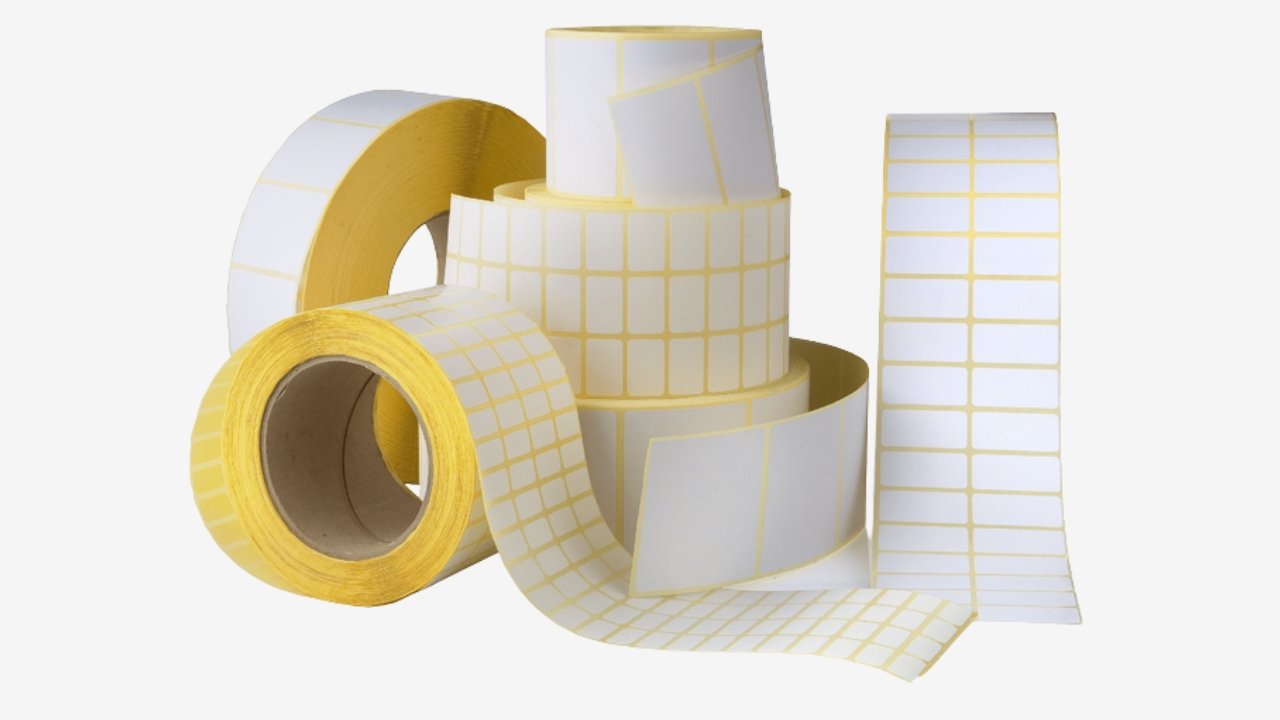
Before we dive into the contrast dimensions, here’s a quick comparison chart to help you learn about the differences:
| Direct thermal | Thermal transfer | |
| Ribbon requirements | No | Yes |
| Label lifespan | 6-12 months | Several years |
| Water resistance | Weak | Strong |
| Heat-resistant | Weak | Strong |
| Printing costs | Low | Medium-high |
| Image accuracy | Good | Excellent |
| Application | Indoor/short-term | Indoor and outdoor / long-term |
Durability & Lifespan
Under normal indoor conditions, direct thermal labels can generally maintain their clarity for 6 to 12 months. After 12 months, the barcode may not be scanned. When the correct ribbon and label material are selected, thermal transfer labels can last for 3 to 5 years or even longer.
The thermal coating of direct thermal labels will naturally deteriorate when exposed to heat, light, and time. Thermal transfer is a physical adhesion of the ink film, and its decay rate is much slower than that of chemical change in the coating.
Print Quality
To the naked eye, the daily barcodes and text printed by direct thermal and thermal transfer methods are hardly distinguishable.
If you want to print small text, high-density QR codes, and detailed patterns on the label, thermal transfer printing is a safer option. Because the edges of the ink film transfers are clearer and sharper.
Not only the type of label, but also the printer’s resolution (DPI) itself has a significant impact on the image quality of the two printing methods.
Cost Comparison
Direct thermal labels are more cost-effective—but that’s only part of the picture. To determine which direct thermal label and thermal transfer label is more economical, you should combine the use cycle and replacement frequency, and consider both the initial cost and long-term cost.
Direct thermal labels only require label paper and no consumables such as ribbons. The cost per sheet is lower, but the lifespan of the labels is short, and they need to be replaced frequently. Thermal transfer labels need to purchase additional ribbons, resulting in higher consumable costs. But labels have a long lifespan, and the long-term costs may actually be lower.
If your printing volumes are large and you only use them for a short period, direct thermal labels will be more cost-effective. If you have a low print volume and plan to use them over a long time, thermal transfer labels offer better value for money.
Environmental Resistance
The direct thermal label will naturally change color after being exposed to high temperatures or being stored for a long time, making the barcode unreadable. A humid environment may cause labels to blur.
Contact with chemicals such as alcohol and solvents and prolonged exposure to ultraviolet rays will accelerate the fading of labels.
The ink film on the surface of the thermal transfer label makes it heat- and light-resistant, preventing fading. The label can last for several years. Even in harsh conditions, the barcodes can still be clearly readable.
In a normal indoor condition, you can choose either one. If you often apply labels in various complex environments such as outdoors, factories, and cold chains, you have to choose thermal transfer labels, because they have excellent high-temperature resistance and chemical corrosion resistance.
Best Use Cases by Industry
Direct thermal labels can be used for short-term use in indoor environments, such as express delivery waybills and supermarket price tags. The reason is that shipping labels are usually used for a short period, and in large print volumes, they are cost-sensitive. Retail price tags need to be changed frequently.
If you work in ticketing and your labels are single-use. We recommend direct thermal labels.
Compliance requirements for medical sample labels and drug labels are both very strict. The chemical industry involves frequent exposure to solvents. That’s why thermal transfer labels are widely used in the medical and chemical industries. Thermal transfer labels are also widely used for inventory management and warehouse tracking.
If you need labels for industrial equipment, asset tracking, or traceability labels that require long-term use, repeated scanning, and high durability, you might consider thermal transfer printing.
FAQ
Can Direct Thermal Labels Be Used in Freezer or Cold Storage Environments?
Yes, but you need to select thermal labels specifically designed for cold storage.
These special labels are built for low-temperature environments, with an adhesive formula and thermal-sensitive coating, allowing them to be used normally in environments down to -20°C.
Standard thermal labels are not suitable for cold storage environments. Low temperatures can cause the adhesive backing of labels to fail and peel off, while condensation water inside cold storage can make the labels blurry.
Can I Print in Color with Thermal Transfer Printing?
The vast majority of thermal transfer printers only support monochrome printing, usually black. This is a limitation of the thermal transfer printing technology itself, not a matter of the equipment grade.
There are multi-color thermal transfer printers on the market, which achieve color effects through multiple transfers. However, due to high equipment costs and slow printing speeds, they are rarely used by businesses.
If your labels need color printing, you can use digital printing or flexographic printing.
How Do I Know if My Current Printer Supports Thermal Transfer Printing?
You can directly refer to the printer’s user manual or the specification page on the manufacturer’s website, where it is usually clearly marked whether the printer supports “Direct Thermal Only” or “Direct Thermal / Thermal Transfer” modes.
Alternatively, contact the customer service of the printer brand to confirm whether your model supports thermal transfer printing. Common brands like Zebra, Dymo, and Brother offer models that support both modes.
You can also open the printer to check if there is a ribbon compartment inside. If there is only a label roll but no ribbon installation position, it indicates that only direct thermal printing is supported.
Are Thermal Transfer Labels More Environmentally Friendly Than Direct Thermal Labels?
None of these is an absolutely environmentally friendly choice. There are environmental drawbacks to each one.
The thermal coating on direct thermal labels usually contains chemical substances such as bisphenol A (BPA) or bisphenol S (BPS). These ingredients pose potential risks to the environment and human health. Some countries and industries have already begun to restrict their use.
The ribbons consumed in thermal transfer printing are solid waste. Improper disposal can lead to environmental pollution.
If you have strict environmental requirements, it is recommended that you choose BPA-free thermal labels or look for a recyclable ribbon solution.
Can Thermal Transfer Labels Be Used on Curved or Uneven Surfaces?
Thermal transfer labels can be used on curved or uneven surfaces. The key factor is the label material, not the printing method.
Paper labels have poor flexibility and are prone to curling and peeling off. Synthetic materials such as PE and PP are more suited for curved surfaces.
Ordinary back adhesive is easy to fail on curved surfaces. You need to select a special adhesive with strong adhesion.
Final Thoughts

We supply both direct thermal labels and thermal transfer labels for businesses across various industries. Custom sizes, materials, and bulk orders are available. If you are not sure which label fits your application, please contact us for label recommendations.

